Inquiry
Form loading...
Choosing the right Mens Eyeglass Case is more practical than it first appears. A case protects delicate lenses, frames, and hinges during commutes, travel, or daily storage. Yet appearance alone can mislead buyers. A slim case may look elegant but crush easily inside a crowded bag. A hard shell may provide stronger protection but occupy too much space. These trade-offs deserve careful attention.
This guide presents seven useful tips for evaluating a Mens Eyeglass Case with greater confidence. The advice considers material strength, interior softness, size, closure quality, portability, cleaning, and long-term value. In hands-on product comparisons, small details often matter most. A smooth lining can prevent scratches. A firm hinge can stop the case from opening unexpectedly. A textured exterior can also reduce slipping on a desk or car seat.
No case is perfect. That matters. Some buyers focus on style and overlook fit. Others choose the cheapest option, then replace it after a few months. Personal habits should influence the decision, too. Someone carrying sunglasses, reading glasses, and cleaning cloths needs more room. A minimalist user may prefer a compact design. Product descriptions should be checked carefully, especially for dimensions and lining materials. Independent reviews, manufacturer specifications, and advice from optical professionals can support a more reliable choice. The best Mens Eyeglass Case is not necessarily the most expensive one. It is the case that protects your glasses consistently, fits your routine, and remains comfortable to carry.
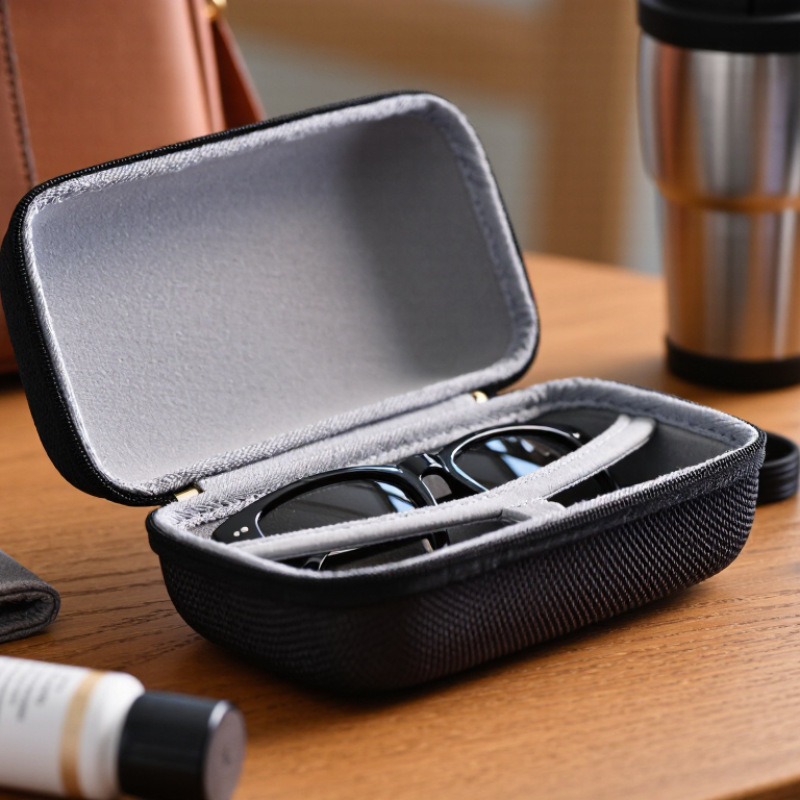
A well-fitted men’s eyeglass case protects more than lenses. It must match the frame’s width, height, bridge, and temple length. The Vision Council’s Consumer inSights reports consistently show that glasses remain a primary vision-correction choice for millions of adults. That makes proper storage a daily concern, not a minor accessory choice. Tip 1: Measure the folded frame before shopping. Tip 2: Add roughly 3–5 millimeters of clearance on each side. Too much space lets the glasses move.
Tip 3: Check the case’s internal height. Thick temples or high-wrap frames need extra room. Tip 4: Choose a firm shell for backpacks, work bags, or crowded drawers. Soft cases suit light travel, but they offer weaker crush protection. Tip 5: Look for a smooth lining. Microfiber can reduce dust contact and small scratches, although careless cleaning still causes damage. I once used a case that looked spacious but pressed against the lenses. It was a poor assumption.
Tip 6: Test the closure with one hand. A secure snap or zipper should close without forcing the frame. Tip 7: Consider daily handling. The American Optometric Association advises storing glasses in a protective case when they are not being worn. A case that is too tight encourages users to leave glasses exposed. Measure twice. Fit matters more than appearance.
| Tip | What to Measure or Check | Typical Requirement | Recommended Case Fit | Useful Features | Common Mistake to Avoid |
|---|---|---|---|---|---|
| 1. Measure the folded glasses | Measure the maximum length, width, and thickness after folding the temples. | Most adult frames are approximately 135–150 mm long, 45–60 mm wide, and 25–40 mm thick when folded. | Choose an internal length and width at least 5–10 mm larger than the folded glasses. | Interior dimensions listed in millimetres; a slightly cushioned lining. | Selecting a case based only on the frame’s advertised width or lens size. |
| 2. Match the case to the frame shape | Compare the widest and highest areas of rectangular, round, aviator, or oversized frames. | Large or curved frames may need more height and depth than standard rectangular frames. | Allow extra clearance around protruding hinges, curved lenses, and thick temples. | A wider opening, rounded interior corners, and flexible lining. | Forcing oversized frames into a narrow shell, which can stress the hinges or lenses. |
| 3. Prioritize lens protection | Check whether the case resists crushing, bending, impact, and contact with hard objects. | Rigid or semi-rigid cases generally provide better everyday protection than soft pouches. | The lenses should not touch the exterior shell when the case is closed. | Hard outer shell, soft interior, and secure closure. | Using a soft pouch alone in a backpack, briefcase, or luggage. |
| 4. Check the interior clearance | Place the folded glasses inside and check for pressure on the bridge, lenses, hinges, and temples. | There should be enough room for the glasses to enter and leave without scraping the lining. | Leave roughly 3–5 mm of side clearance and avoid compression when closed. | Non-abrasive microfiber or smooth fabric lining with no exposed seams. | Choosing an extremely tight case that presses against coated lenses. |
| 5. Select a practical closure | Evaluate how easily the case opens with one hand and whether it stays closed during movement. | Spring-hinge, zip, magnetic, and snap closures each offer different levels of speed and security. | The closure must shut fully without catching the frame or pressing on the lenses. | Smooth mechanism, firm alignment, and no sharp edges near the glasses. | A loose magnetic or snap closure that can open inside a bag. |
| 6. Consider daily portability | Assess the case’s weight, thickness, pocket compatibility, and resistance to daily wear. | A compact everyday case is often about 155–170 mm long and 55–75 mm wide, depending on the frame size. | The case should fit comfortably in a coat pocket, work bag, or backpack without bending. | Lightweight construction, wipe-clean exterior, and rounded edges. | Choosing a bulky case that is difficult to carry or store. |
| 7. Match the case to usage conditions | Think about commuting, travel, outdoor activities, storage, and whether cleaning cloths or accessories must fit inside. | Travel and outdoor use require more impact resistance; home storage may prioritize capacity and accessibility. | Use one-frame clearance for a slim case or additional depth for glasses plus a cleaning cloth. | Water-resistant exterior, reinforced walls, divider, or a small accessory compartment. | Overfilling the case with keys, coins, or cleaning products that may scratch the lenses. |