10 Tips for Buying the Best Large Spectacle Case
Choosing the right Large Spectacle Case is not a minor shopping decision. It protects costly lenses, delicate frames, and your daily comfort. The Vision Council’s 2024 Consumer inSights research identifies eyeglasses as the leading form of vision correction among U.S. adults. That widespread use creates a practical need for reliable storage. A loose case in a crowded handbag can face pressure, dust, keys, and accidental drops. The damage may appear small, but scratched lenses quickly become expensive.
A good Large Spectacle Case should fit oversized frames without forcing the temples closed. It should also provide firm hinges, a protective lining, and enough depth for sunglasses with thicker arms. Dr. Gary Heiting, OD, an optometrist and former All About Vision editor, advises, “The best way to clean your eyeglasses is to rinse them under a gentle stream of lukewarm tap water.” His guidance matters here. Clean lenses should enter a clean case, not a dusty one. The Vision Council also emphasizes proper eyewear care as part of maintaining comfortable, effective vision correction.
This guide, “10 Tips for Buying the Best Large Spectacle Case,” examines structure, material, portability, closure strength, and interior space. Hard shells usually resist crushing better than soft pouches. Yet, they can take more room. Leather may feel refined, but stitching and lining quality vary widely. Some product descriptions sound impressive. They still need careful checking. Measure your frames first. That simple step is often missed. Even this approach is not perfect, because personal habits, travel conditions, and frame shapes can change the best choice.
Define “Large” by Frame Measurements and ISO 12312-1 Eyewear Guidance
Tip 1: Measure the frame, not the marketing label. “Large” has no universal case size. Measure the folded spectacles at their widest, longest, and thickest points. Include protruding hinges, nose pads, and curved temples. Then choose an interior with roughly 5–10 millimetres of clearance around the frame. A tight case can press lenses against its lining. That small detail matters.
Tip 2: Check the eyewear guidance separately. ISO 12312-1 addresses sunglasses and related eyewear for general use, including optical performance, durability, and protective requirements. It does not define a “large” spectacle case or certify case capacity. Look for eyewear information linked to the standard, while treating the case as a separate storage decision. Standards help, but they do not replace measuring your actual frame.
Tip 3: Test the case with your glasses inside. The lid should close without force, and the frame should not shift when gently shaken. A firm hinge and soft, non-abrasive lining offer practical protection during travel. I once trusted a case labelled oversized, yet its narrow corners bent the temples. Labels can mislead. Recheck the measurements. Also consider cleaning cloth thickness, spare nose pads, and whether the case fits your bag. A little unused space is useful; excessive space lets spectacles slide and collide with the shell.
10 Tips for Buying the Best Large Spectacle Case — Define “Large” by Frame Measurements and ISO 12312-1 Eyewear Guidance
| No. |
Buying Dimension |
Practical Guidance |
Useful Measurement or Check |
| 1 |
Measure the folded frame first |
Do not rely only on labels such as “large” or “oversized.” Measure the actual folded spectacles, including hinges, temple arms, and any side shields. |
Case internal length ≥ frame length + 10–15 mm |
| 2 |
Check internal width |
The case should accommodate the widest part of the folded frame without forcing the temples inward or pressing against the lenses. |
Internal width ≥ frame width + 8–12 mm |
| 3 |
Allow enough internal height |
High-bridge frames, thick rims, protective eyewear, and frames with raised nose pads need more vertical clearance than slim prescription frames. |
Internal height ≥ folded frame height + 8–12 mm |
| 4 |
Use a three-dimensional fit test |
Compare the frame’s folded length, width, and height with the case’s usable interior dimensions. Interior dimensions matter more than exterior dimensions because padding reduces available space. |
Recommended internal clearance: 10–15 mm on the longest dimension |
| 5 |
Choose a protective structure |
For bags, travel, or crowded storage, select a rigid or semi-rigid shell that resists crushing. A soft pouch is better for scratch prevention than for impact protection. |
Look for a firm shell, secure closure, and no exposed sharp edges inside. |
| 6 |
Protect lenses from abrasion |
The interior should be lined with a clean, non-abrasive fabric. The lenses should not rub against the zipper, snap, seams, or hard plastic. |
Place the spectacles with the lenses facing the soft lining and check for contact points. |
| 7 |
Prevent movement inside the case |
A case that is too large may allow the frame to slide and strike the walls. Select a close fit or use a soft retention panel that does not press directly on the lenses. |
After closing, gently shake the case; the frame should not move excessively. |
| 8 |
Consider hinge and temple-arm clearance |
Wide hinges, thick temples, spring hinges, and folded sports frames can require extra length and width. Confirm that the closure does not press on these areas. |
Leave clearance around both hinges and avoid cases that close by compressing the frame. |
| 9 |
Match the case to eyewear use |
For everyday prescription glasses, prioritize lining and convenient access. For outdoor or sports eyewear, prioritize impact-resistant construction, ventilation, and sufficient room for curved or wraparound frames. |
For wraparound frames, measure the widest curved section after folding and test the actual frame in the case. |
| 10 |
Check eyewear guidance separately from case quality |
ISO 12312-1 addresses general-purpose sunglasses and related optical, mechanical, and solar-radiation requirements; it does not define a universal “large case” size or certify a spectacle case. Confirm that applicable eyewear markings and supplier documentation are present for the glasses themselves. |
Do not treat an ISO 12312-1 reference as proof that a case is impact-resistant or correctly sized. |
Measurement formula: Measure the folded spectacles at their maximum length, width, and height. Select a case whose usable internal dimensions exceed those measurements, rather than relying on the case’s external dimensions. ISO 12312-1 is eyewear guidance for applicable general-purpose sunglasses, not a case-sizing standard.
Prioritize Impact Protection Through ANSI Z87.1 Testing Requirements
10 Tips for Buying the Best Large Spectacle Case
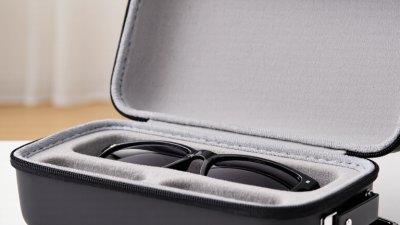
Prioritize impact protection before appearance. ANSI Z87.1 covers protective eyewear performance, not automatic case certification. A reliable case should help prevent crushing, impact damage, and lens scratches during transport. Choose a rigid shell with reinforced seams, a secure hinge, and a soft interior. Your spectacles should sit naturally, without pressure on the lenses or frame. Try a simple check. Place the case in a crowded work bag and press around the lid. If the shell flexes too easily, reconsider the purchase.
Tip 1: Ask for clear product specifications. Do not assume ANSI compliance applies to the case. Confirm that your protective eyewear has documented ANSI Z87.1 testing. Tip 2: Check the interior depth and width. Oversized frames need space around hinges and side arms. Tip 3: Test the closure repeatedly. It should remain shut after movement, but open without excessive force.
A large case also needs practical handling. Look for a textured surface that stays secure with dusty or gloved hands. Ventilation can reduce trapped moisture after outdoor work, although too many openings may weaken protection. Inspect the padding for gaps, loose fibers, or hard contact points. Small flaws matter. A case may look durable yet fail when packed under heavy equipment. I would not judge it by weight alone; some heavy designs offer poor internal protection. Compare fit, shell strength, closure reliability, and documented safety information together.
Compare Case Materials Using ASTM D4169 Distribution-Test Principles
10 Tips for Buying the Best Large Spectacle Case
Compare Case Materials Using ASTM D4169 Distribution-Test Principles
A large spectacle case should protect lenses during compression, vibration, and repeated drops. ASTM D4169 provides a useful distribution-testing framework for comparing materials. It examines hazards such as vehicle vibration, handling impacts, stacking pressure, and temperature conditioning. The standard does not certify every case design. That distinction matters.
Rigid polypropylene shells usually resist compression well, while molded EVA offers lighter cushioning. Soft fabric cases may feel attractive, but their performance depends heavily on foam thickness and seam strength. Check the hinge, zipper, and interior corners carefully. These areas often fail first. A practical comparison uses identical case sizes and equal test loads. Record dents, cracked edges, lens contact, and closure movement after each test.
The OECD Global Plastics Outlook reports that global plastic waste reached 353 million tonnes in 2019, with only 9% recycled. Material efficiency deserves attention. The U.S. EPA’s Advancing Sustainable Materials Factsheet reports 82.2 million tons of packaging waste in 2018. These figures support choosing durable cases that do not need frequent replacement. Still, durability claims can be incomplete. A case surviving one drop may weaken after heat exposure and vibration. I would request test conditions, sample counts, and photographs, not only a passing statement. Real use is messier. A slightly heavier case may protect better, but its larger size can create storage problems.
Evaluate Capacity, Closures, and Hinge Life with Manufacturer Data
10 Tips for Buying the Best Large Spectacle Case
A large spectacle case should protect more than one pair of glasses. Measure its inner length, width, and height before trusting the stated capacity. Manufacturer data may list external dimensions, which can hide thick padding and narrow corners. Check whether the case holds sunglasses, cleaning cloths, and a spare frame without pressing the lenses. My first estimate was wrong. A case advertised for three pairs barely fit two bulky frames.
Tip 1: Request internal measurements and usable capacity. A reliable manufacturer should explain testing methods, frame sizes, and tolerance ranges. Look for photos showing loaded compartments, not empty interiors. Firm dividers help, but overly tight sections can scratch temples during removal. Small details matter.
Tip 2: Examine the closure data. Zippers, snaps, magnets, and clasp systems behave differently under daily use. Ask whether closures were cycle-tested, and request the tested number of openings. Hinge life deserves the same attention. A manufacturer should disclose hinge material, pivot construction, and fatigue-test results. If that information is missing, treat attractive claims carefully.
Tip 3: Test one sample yourself. Open the case repeatedly with one hand. Listen for uneven clicks. Inspect stitching around the hinge after several days. Laboratory results are useful, but real handling reveals awkward angles and weak alignment. Even dependable data has limits, especially when testing conditions differ from your routine.
Verify Recycled-Content Claims Under ISO 14021 Environmental Standards
10 Tips for Buying the Best Large Spectacle Case
A large spectacle case should protect oversized frames without wasting material. Check the recycled-content claim before judging its environmental value. Under ISO 14021, such claims must be clear, specific, and supported by reliable evidence.
“Made with recycled material” is too vague by itself.
Ask whether the content is pre-consumer or post-consumer material. These terms describe different waste sources.
Request a product specification or supplier declaration. It should identify the recycled percentage and the material used. Packaging, fabric lining, shell, and zipper may contain different percentages. Do not assume the whole case has one recycled-content rate. ISO 14021 guides self-declared claims, but it does not automatically certify every product. That distinction matters.
Inspect the case in person when possible. A rigid shell should resist gentle pressure around the corners. The hinge should open smoothly, without stressing the lining. Look for a label that matches the written documentation.
Keep photographs and supplier replies for comparison. This takes extra time. It can prevent greenwashing and disappointing purchases.
I once focused too heavily on recycled content and overlooked a weak zipper. That was a useful correction.
A durable case may reduce replacement waste, but durability still needs practical testing. Check whether large frames fit without forcing the lid. Measure the interior, not only the advertised exterior. Ask careful questions. Claims deserve evidence.