Choosing one seems simple until your readers get scratched, squeezed, or lost at the bottom of a bag. A good Reader Eyeglass Case should protect the lenses, fit the frame, and suit the way you carry it. Small details matter. A firm shell can resist pressure from keys and a water bottle. A soft pouch takes less room in a coat pocket. Neither style is perfect for every reader.
This guide explores features worth checking before you buy: lining, closure, size, weight, and ease of access. A case should close without pressing the frame arms inward. Its lining should feel smooth against the lenses. If you read mostly at a desk, a compact design may be enough. Commuters may value a sturdier case that stays shut inside a crowded tote. Materials and stitching deserve attention, too; a loose seam can shorten a case’s useful life. Still, the most expensive option is not automatically the best. Fit can be personal, and product descriptions may not show how a case feels in daily use. We’ll compare practical trade-offs to help you find protection suited to your readers, routine, and budget, without paying for features you won’t use.
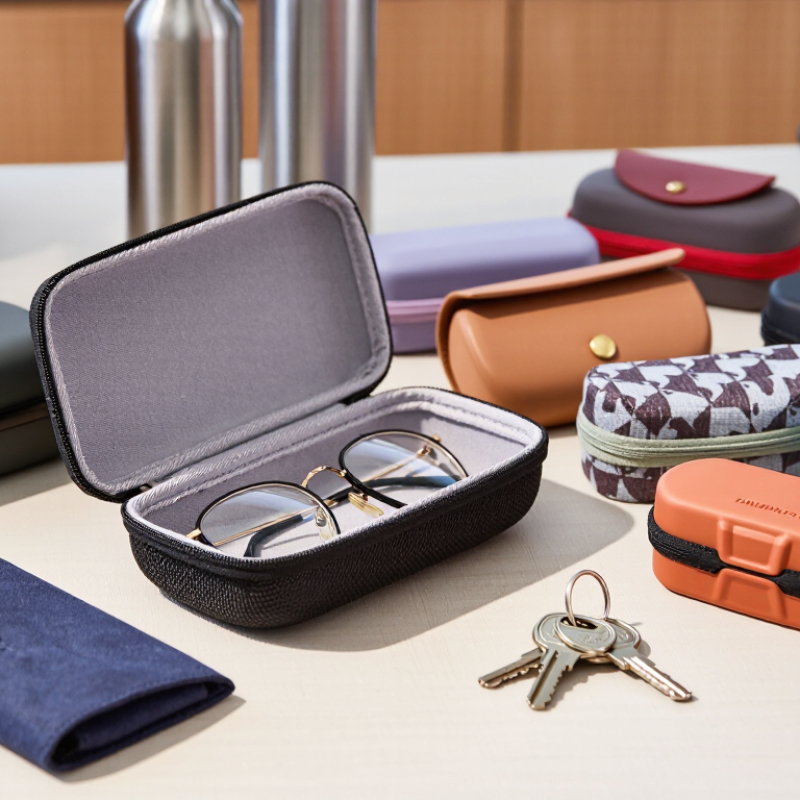
A reader eyeglass case is more than a place to stash glasses. It creates a barrier against grit, scratches, and pressure from keys or a water bottle in a crowded bag. Small details matter: lenses left face-down on a café table can pick up fine marks, while loose glasses are easy to misplace. The World Health Organization’s 2019 World Report on Vision estimates that at least 2.2 billion people worldwide have near or distance vision impairment. A case cannot correct vision, of course, but it helps keep reading glasses ready for regular use.
The Vision Council’s 2023 Consumer inSights report estimated that 76% of U.S. adults use some form of vision correction. That figure is not specific to reading glasses, but it reflects how common eyewear is in daily life.
For readers carried in a purse or work bag, a rigid case offers better protection from crushing than a soft pouch. A pouch is lighter and easier to slip into a pocket, though it will not resist much pressure. Look for a secure closure, a clean interior, and enough room to avoid squeezing the frames. A case cannot prevent every accident. Even so, a well-fitting one makes everyday handling less careless.
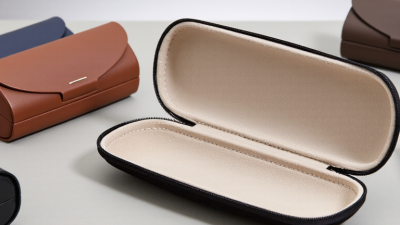
Reader eyeglass cases differ mainly in how they handle scratches, bumps, and pressure. A soft microfiber pouch is light and easy to slip into a pocket. It helps keep lenses from rubbing against keys or coins, but offers little protection if a bag gets squeezed. Use it for careful, low-impact storage. Keep the lenses clean first; trapped grit can still leave fine marks.
A semi-rigid case, often made with a padded outer layer, offers a middle ground. It can soften everyday knocks while taking up less room than a bulky hard case. For crowded bags or frequent travel, a rigid shell is usually the safer choice against crushing. Check that your readers fit without pressure on the hinges. Snug is not always secure. A case that forces the frame shut may cause wear over time. One detail is easy to overlook: a hard case can protect well, yet collect dust inside if its lining stays dirty. Match the case to your routine, inspect the closure, and clean the interior occasionally. No case is perfect.
A reader eyeglass case should fit the glasses when their arms are folded, not just match the frame’s width. Measure the glasses at their longest, widest, and thickest points. Then compare those measurements with the case’s interior dimensions, since exterior measurements include the case walls. Leave a little clearance around the frame so it slides in without pressure.
A snug fit matters. But too much room lets glasses shift and bump against the lining. Frame shape can change the fit: wide temples or a raised nose bridge may catch on a narrow opening. If possible, place the folded glasses inside and close the case gently. The lid should shut without pushing down on the lenses or forcing the hinges. This check takes seconds.
Soft cases suit slim frames and pockets, while a firm shell offers more structure in a bag. Look for a clean interior with no rough seams near the lenses. A small caveat: listed dimensions can be confusing, and interior space is not always stated. When details are unclear, ask for internal measurements or choose a case with a return option. I might be tempted to buy the smallest case that fits on paper, but real frames do not always fold into neat rectangles.
A reader eyeglass case should match how you carry and use your glasses, not just how it looks. A rigid shell can resist pressure from keys or a packed bag, while a soft fabric sleeve takes up less room. Microfiber lining helps reduce scratches, but it will not protect frames from being crushed. Check the seams and lining in person; a loose edge can catch a temple arm. Small details matter.
Closures change how convenient a case feels. A magnetic flap opens quickly, though a weak magnet may let the case gape inside a tote. Zippers hold glasses more securely, but can snag if the frames sit too close to the track. A snap closure gives a clear click, yet may take two hands. Try opening and closing the case with one hand. Awkward? That matters.
Portability is a trade-off. A hard case offers more protection but may feel bulky in a coat pocket; a slim sleeve travels easily but leaves lenses exposed to pressure. Compare the case with your usual bag and check that the folded frames fit without force. I would leave a little room rather than choose the smallest possible size. I have found this easy to overlook. The “best” material also depends on daily habits: frequent outdoor use calls for wipeable surfaces, while desk use may favor a light, compact sleeve. No case is perfect.
| Case Type | Common Materials | Typical Closure | Protection | Portability | Best For | Trade-Offs |
|---|---|---|---|---|---|---|
| Soft pouch | Microfiber, cloth, or soft synthetic fabric | Open top, drawstring, or simple flap | Helps reduce scratches and dust; offers little protection from crushing or impact | Very lightweight and easy to slip into a pocket or small bag | Readers carried inside a larger bag, especially when minimizing bulk matters | Does not hold its shape, and glasses can be pressed or bent by other items |
| Padded fabric case | Fabric exterior with foam, quilted, or soft-lined interior | Zipper, flap, or snap | Provides cushioning against minor bumps; protection depends on padding and construction | Lightweight, though generally bulkier than a simple pouch | Everyday carry when some cushioning is wanted without a rigid shell | Usually less resistant to crushing than a well-built hard case |
| Molded hard-shell case | Often molded plastic or a rigid composite with a fabric or soft lining | Snap, clasp, or spring hinge | Rigid sides help shield glasses from pressure and everyday knocks | Offers dependable structure but takes up more space than a soft pouch | Carrying readers in a backpack, handbag, or crowded drawer | Can be bulky; fit and hinge quality vary, so check that the glasses sit without pressure |
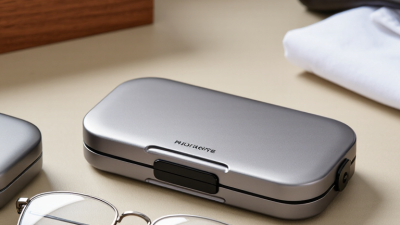
| Metal hard case | Thin metal shell, commonly with a lined interior | Hinged lid, often with a snap closure | Rigid shell resists crushing; the lining helps prevent lens contact with the case interior | Compact for its strength, but may feel heavier than a soft fabric case | Readers that need a firm, pocketable enclosure | May dent, and an unlined or damaged interior can scratch lenses |
| Folding case | Fabric or synthetic exterior with foldable panels and a soft lining | Magnetic flap, snap, or folded closure | Can provide moderate protection when assembled; not equivalent to a rigid case under heavy pressure | Folds flatter when empty, making it convenient to store or travel with | Travelers who want to save space when the case is not in use | Protection depends on panel stiffness and closure; folding it while glasses are inside is not suitable for every design |
Selection tip: Match the case to the way you carry your readers. A soft pouch is compact, while a rigid case is generally a better choice when the glasses may be pressed by other belongings. Case performance varies with fit, lining, materials, and construction.
How to Choose the Best Reader Eyeglass Case?
Assessing Daily Use, Storage, and Care Needs
Think about where your readers spend the day: in a coat pocket, work bag, or beside the bed. A case should fit that routine, not just look tidy on a shelf. Check its inside length and width against your folded frames. Fit matters. If the case is too tight, the arms may press against the lenses; too loose, and the glasses can shift when your bag moves.
Consider how often you open it and what else you carry. A firm shell can help protect glasses from keys and notebooks in a crowded bag. For a desk drawer or bedside table, a lighter case may be easier to handle. Look for a closure you can use without forcing it, especially if you reach for your readers often. I might be overvaluing convenience here, but a case that stays shut matters little if it is a nuisance to open.
Care needs are simple but easy to neglect. Keep the interior free of crumbs and grit, which can rub against lenses. Wipe the case with a soft, slightly damp cloth, then let it dry fully before storing glasses. Avoid leaving it in a hot car or near a heater; heat can affect frames and some case linings. Check the lining now and then. Loose fabric can catch on a frame arm.
A practical comparison of everyday case-selection priorities
Protection and portability are key for daily use. Consider access and storage to suit your routine, and choose materials that are easy to keep clean. Scores are illustrative decision-guide ratings, not survey results.