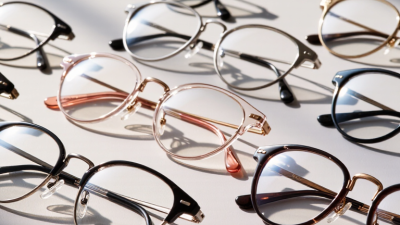
What Type of Round Glasses Is Best for Your Face Shape?
Choosing Round Glasses is not just a matter of matching a frame to a face-shape label. The right pair also depends on frame width, lens size, bridge fit, and personal comfort. A round frame can soften angular features, while a broader design may balance a narrower face. These are starting points, not rules. Real faces rarely fit tidy categories. A frame that looks balanced in a chart may feel too wide across your temples or slip down your nose after ten minutes.
Professional fitting matters, too. The World Health Organization’s World Report on Vision (2019) estimated that at least 2.2 billion people worldwide have near or distance vision impairment. That figure is about vision health, not fashion preferences, but it is a useful reminder that eyewear must work beyond the mirror. Prescription needs, lens thickness, and the position of your eyes can affect how a frame looks and feels. Try on more than one size. Check the fit from the front and side, and notice whether the rims sit comfortably without pressing your cheeks. A qualified optician can help assess fit and lens compatibility. And, honestly, face-shape advice can oversimplify things. Your best choice may be the pair that feels right, even when it breaks the usual style rules.

How to Identify Your Face Shape
Before choosing round glasses, identify your face shape in soft, even light. Pull your hair back and face a mirror straight on. Look at your forehead, cheekbones, jawline, and face length. A phone photo can help, but hold the camera at eye level to avoid distortion. Start with a mirror.
Compare the widest areas rather than relying on one feature. A face with similar width and length, plus a gently curved jaw, may be round. A square shape often has a broad forehead and a more defined jaw. Oval faces tend to be longer than they are wide, with balanced proportions. A heart-shaped face is usually wider at the forehead and narrower toward the chin. If you want more precision, compare the measurements across your forehead, cheekbones, and jaw, then compare face length from hairline to chin. No need to measure perfectly. These categories overlap, and lighting, hairstyle, or expression can change what you notice. Use the shape as a starting point, not a fixed rule; comfort and frame width matter just as much when trying glasses on.
What Type of Round Glasses Is Best for Your Face Shape?
How to identify your face shape: compare face length and the relative widths of your forehead, cheekbones, and jaw.
How to read the chart: Scores are a simplified guide, not biometric measurements. For face length, 1 means similar to face width, 2 means moderately longer, and 3 means notably longer. For forehead, cheekbone, and jaw width, 1 means relatively narrow, 2 intermediate, and 3 relatively broad. Oval faces often suit many round frames; angular round frames can balance round faces, while softer round frames can complement square faces. For heart-shaped faces, try light, delicate round frames; for oblong faces, consider larger round frames that add visual width.
Choosing Round Glasses for Oval, Square, and Heart-Shaped Faces
For oval faces, round glasses usually work well because the face already has balanced proportions. Try small or medium frames that follow your cheekbone width without extending far beyond it. A narrow frame can make the face look longer, while an oversized one may hide its natural shape. Check the fit from the front and side. Comfort matters as much as appearance.
Tips: Look for pupils near the center of each lens. The bridge should rest steadily without pinching, and the temples should not press behind your ears. Check the frames in daylight, too; rim thickness can look different indoors.
Square faces often have a broad forehead and defined jaw, so round lenses can soften those angles. Thin rims or gently rounded frames create contrast without dominating the face. Very small circles may exaggerate facial width, though this depends on your features.
Heart-shaped faces are often widest at the forehead and narrower at the chin. Lightweight round frames can balance that taper. Consider a modest frame width and subtle rims, rather than heavy tops that draw attention upward. Fit varies with nose shape, lens prescription, and personal taste. A frame that looks ideal in a photo may feel awkward after an hour of wear.
Selecting Round Frames for Round and Diamond-Shaped Faces
Round glasses can suit both round and diamond-shaped faces, but frame scale and structure matter. For a round face, try a larger round frame with a defined brow line or slightly angular corners. These details add contrast to soft cheeks. A narrow bridge or undersized lenses may make the face look wider, so check the frame against your cheekbones and temples. Small differences matter.
For a diamond-shaped face, where cheekbones are often the widest point, round or oval lenses can soften sharp angles. Choose frames that do not extend far beyond the cheekbones, and look for a comfortable bridge that keeps the lenses level. The Vision Council’s 2023 Consumer inSights report found that roughly three-quarters of U.S. adults use vision correction, underscoring why fit should serve both appearance and everyday wear. Still, face-shape labels are rough guides; hair, brow position, and prescription needs can change what feels balanced.
Tips: Check the frame from the front and side. Your pupils should sit near the lens centers, and the temples should rest without pinching. Move your head, too. If the frames slide or touch your cheeks when you smile, try another size. A mirror test helps, but it is not perfect.
How to Choose the Right Frame Size and Fit
Round glasses should sit level, with the pupils near the center of each lens. The frame should not press your temples or slide when you look down. A useful starting point is the size printed inside many frames: lens width, bridge width, and temple length, measured in millimeters. Compare those numbers with a pair that already feels comfortable. Numbers help, but they are not the whole fit.
The Vision Council’s 2023 Consumer inSights report found that 76% of U.S. adults use some form of vision correction. That makes everyday comfort more than a style detail. For a narrow face, smaller round lenses can reduce side-to-side movement; wider faces may need more overall frame width, not merely larger lenses. Check that the bridge rests steadily without pinching, and that the lower rims do not touch your cheeks when you smile. A quick mirror check can miss pressure that appears after an hour. Fit is personal, and even a careful choice may need adjustment by an optical professional.
Tips: Measure a comfortable pair before shopping. Look straight ahead: your eyes should sit close to each lens’s center. Turn your head, then bend forward gently. If the frames shift, the fit may need work. Don’t force a perfect match from the numbers alone.