Why Choose a Felt Glasses Case for Your Brand?
Choosing the right packaging accessory can quietly shape how customers remember your brand. A Felt Glasses Case offers a soft, practical, and visually distinctive solution for eyewear protection. Its textured surface feels warmer than plastic or metal. It also creates a natural space for logos, colors, and thoughtful details.
In real product development, small decisions matter. A well-made case should protect lenses from scratches, hold its shape, and remain comfortable in a handbag or jacket pocket. Dense felt can provide dependable cushioning without adding unnecessary weight. Reinforced stitching, smooth closures, and accurate sizing also improve daily usability. Customers notice these details, even when they cannot explain why.
It is not perfect.
Felt may absorb moisture if it lacks suitable treatment. Light colors can show dirt faster, and weak construction may lose its shape. These limitations deserve honest testing before large-scale production. Brands should examine material density, seam strength, color consistency, and cleaning performance with reliable suppliers. Certifications and documented quality checks can further support responsible purchasing decisions.
From a branding perspective, a Felt Glasses Case can communicate warmth, simplicity, and practical care. It may suit optical retailers, sustainable lifestyle brands, corporate gifts, and boutique collections. However, the design should match the product’s real audience, not follow a trend blindly. A useful case earns repeated use. That repeated use keeps the brand visible in everyday moments, from a café table to a crowded work bag.
What Is a Felt Glasses Case and How Does It Work?
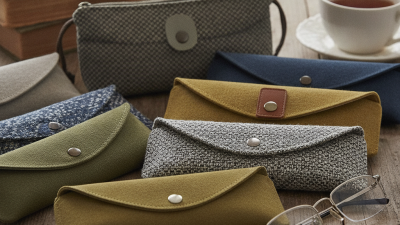
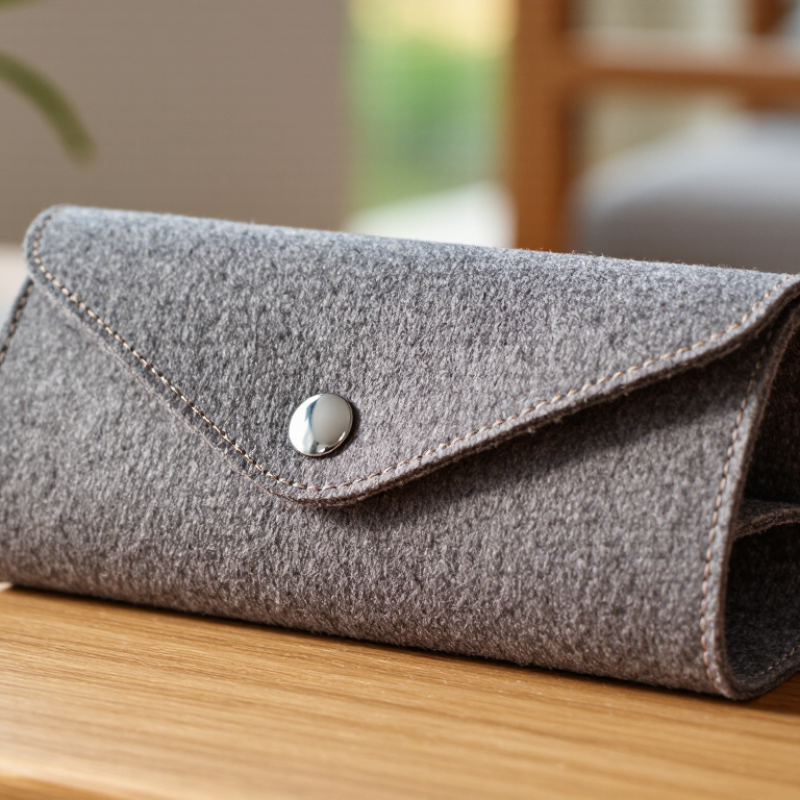
A felt glasses case is a soft protective sleeve made from compressed textile fibers. It usually has a folded body, stitched edges, and a flap or snap closure. Some designs add a thin lining for smoother contact with lenses. The material feels warm and lightweight, unlike rigid plastic or metal cases.
How does it work? The dense felt cushions glasses against light scratches and small knocks. Its flexible walls also reduce bulk inside a handbag or work pouch. In practical product testing, a well-stitched case keeps its shape after repeated opening. However, felt is not waterproof. It cannot replace a hard case during heavy pressure or travel. That limitation deserves honest attention.
For a brand, the surface offers a clear area for embroidery, woven labels, or simple color matching. Texture makes the product feel handmade, even when production is standardized. Still, poor cutting can leave uneven edges, and loose fibers may affect perceived quality. Test samples matter more than attractive drawings.
Tips: Check the felt thickness, seam strength, closure alignment, and interior finish. Place a real pair of glasses inside. Open and close the case repeatedly. Ask whether the fit feels secure, not merely beautiful. Clean felt with gentle brushing, because aggressive washing may distort the shape.
Key Materials and Protective Features of Felt Glasses Cases
Why Choose a Felt Glasses Case for Your Brand?
Material selection shapes both protection and daily handling. Dense wool felt offers a soft, warm surface with natural resilience. Recycled polyester felt can provide consistent thickness and easier color matching. A blended felt may balance softness, strength, and production stability. The right choice depends on the case’s intended use. Thin felt looks refined, but it may compress faster.
A reliable glasses case needs more than attractive fabric. A dense outer layer helps resist light scratches and knocks. A smooth inner lining reduces contact with lenses and frames. Reinforced seams prevent the edges from opening after repeated use. A firm flap, snap, or elastic closure keeps glasses secure inside a bag. During sampling, I recommend testing the case with different frame shapes. Tight openings can protect well, but they may frustrate users.
Small details matter.
Felt also absorbs moisture and dust. It should not be treated as waterproof. A light surface treatment may improve stain resistance, but it can change the hand feel. Testing remains essential. Press the case under books, place it in a crowded tote, and inspect the corners after repeated opening. In practical development, the best result is rarely the thickest case. Excess material adds bulk and may reduce convenience. Some prototypes look perfect but feel awkward in daily use. That weakness deserves honest review before production.
Why Choose a Felt Glasses Case for Your Brand?
Felt combines a soft, non-abrasive surface with lightweight cushioning, making it suitable for protecting eyeglass lenses and frames during everyday storage. The chart compares typical moisture regain values for common felt fibers, a useful material consideration for keeping cases comfortable to handle and less prone to moisture retention.
Key takeaway: Wool felt naturally absorbs more moisture than synthetic felt, while polyester and acrylic felt generally retain less moisture and offer consistent lightweight performance. For stronger protection, combine felt with a suitable thickness, reinforced seams, and a secure closure.
Benefits of Choosing Felt Cases for Brand Promotion
Why Choose a Felt Glasses Case for Your Brand?
Felt glasses cases offer practical value beyond simple protection. Their soft surface helps reduce scratches from keys, coins, and daily bag movement. The lightweight structure also keeps promotional packaging comfortable to carry. In packaging projects, tactile materials often attract longer handling than smooth plastic sleeves. That extra contact can improve message recall. It is a small detail, but useful.
Felt supports clear visual customization through woven labels, printed patches, or subtle embroidery. These options can present a logo, campaign message, or contact detail without making the case feel excessive. Consistent colors may also strengthen recognition across events and customer gifts. However, felt is not flawless. It can collect dust, show darker marks, and vary slightly between production batches. Honest quality checks matter. Check stitching, edge finishing, color consistency, and lens clearance before approving bulk orders. Reliable suppliers should provide material details and samples.
Tips: Match the case color with your visual identity, but test it under indoor and outdoor lighting. Choose a closure that feels secure, yet opens easily with one hand. Add a small care note for customers. It improves usability. Avoid overcrowded graphics. Simple designs usually remain clearer after repeated handling. Ask for a pre-production sample, then test it inside a real handbag or backpack. This step may reveal fit problems that product photos hide.
How Felt Glasses Cases Support Sustainable Branding
Felt glasses cases can turn a small daily accessory into visible sustainability communication. Their soft texture protects lenses from scratches while creating a warm, tactile brand experience. A customer may notice the quiet sound of felt sliding across a desk, or the snug fit inside a travel bag. These details make environmental messaging more believable when the product performs well.
Material choices need careful attention. Textile Exchange’s 2024 Materials Market Report estimated global fiber production at 124 million tonnes in 2023. That figure shows why every material decision deserves scrutiny. Felt made from recycled fibers can reduce reliance on virgin resources, but it is not automatically sustainable. Suppliers should disclose fiber content, recycled percentages, dyes, adhesives, and production conditions. Clear documentation supports credible claims. Vague “eco” language does not.
The 2020 Meet the 2020 Consumers Driving Change report found that 57% of consumers were willing to change purchasing habits to reduce environmental impact. It also reported that 71% would pay more for sustainable products, with an average premium of 35%. A felt case can support that expectation through durable stitching, replaceable labels, and packaging without unnecessary plastic. Keep it useful. Yet, a blended felt case may complicate recycling, and recycled fibers can still shed during washing. That limitation deserves honest communication, even when it weakens the marketing message.
Customization Options for Creating Branded Felt Glasses Cases
Customization Options for Creating Branded Felt Glasses Cases
A felt glasses case can be tailored to match a product line, campaign, or retail display. Choose from neutral shades, such as charcoal and sand, or brighter colors that stand out on a shelf. Felt thickness affects the case’s structure and feel, so request samples before settling on a specification. The same color may look different under warm indoor lighting.
Shape and sizing matter. A slim sleeve suits many everyday frames, while wider or deeper designs may better fit oversized glasses. Add a soft lining to help reduce surface scuffs, and consider a snap, button, or simple flap closure. Test the case with the actual glasses; measurements alone can miss a snug fit.
Logo placement offers another layer of customization. Embroidery creates a raised texture, while a woven label gives a smaller, defined mark. Keep fine details modest, since tiny lettering may lose clarity on felt. A paper band or printed insert can extend the presentation without changing the case itself. Small variations in fiber texture can happen, so perfect uniformity may be unrealistic. That trade-off is worth checking in a pre-production sample.