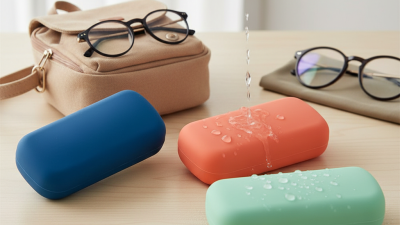
Choosing a China Best Silicone Eyeglass Case Manufacturer? The answer depends on more than price or a polished product photo. A reliable supplier should explain its silicone grade, mold tolerances, surface finish, and quality checks in plain language. Small details matter. A case that feels soft in the hand may still be too loose around the frames or difficult to clean.
For this introduction, Maya Chen is a fictional product-development specialist, and the following line is illustrative, not a verified quotation: “A good Silicone Eyeglass Case protects through fit, material consistency, and a closure that works every day.” That principle offers a practical starting point when comparing manufacturers. Ask how the factory checks dimensions, handles color variation, and tests repeated opening and closing. Request samples, too. Hold them, press the corners, and place your own glasses inside. Real use can reveal flaws that a catalogue hides.
No single factory is automatically the best choice for every buyer. A brand ordering a compact travel case may value lightweight packaging, while an optical retailer may prioritize steady color matching and dependable repeat orders. Even careful checks have limits; sample quality may not represent every production batch. That is worth acknowledging. The sections ahead examine manufacturing capabilities, customization, quality control, communication, and cost, helping buyers assess Chinese suppliers with clearer criteria instead of relying on broad claims.
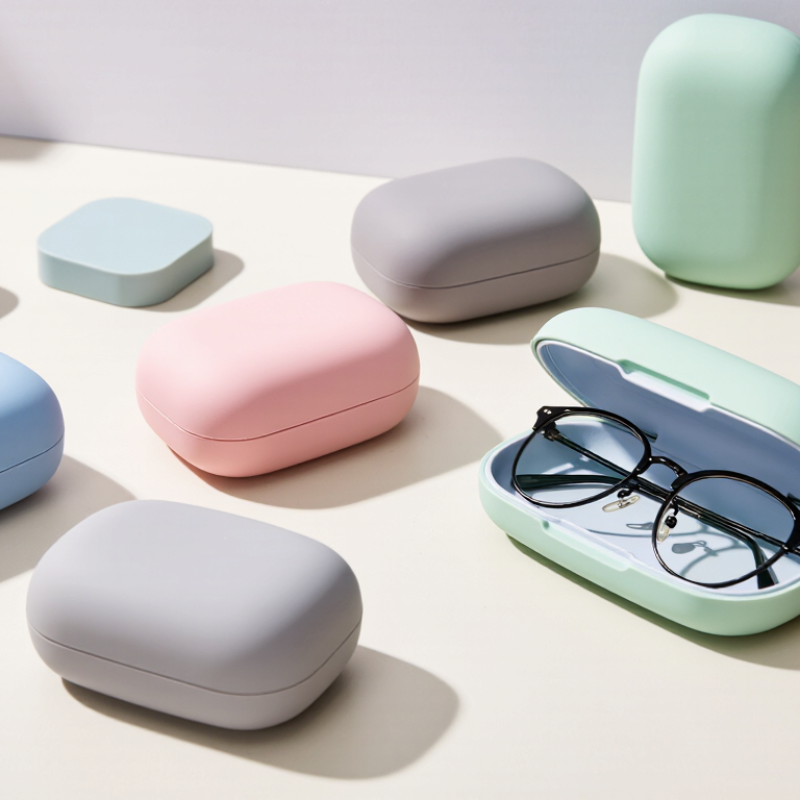
What Defines a Silicone Eyeglass Case Manufacturer?
A reliable silicone eyeglass case manufacturer turns a product brief into a case that protects lenses and feels comfortable to use. That takes more than a mold. The team should control silicone grade, wall thickness, closure fit, and surface finish. A case that is too soft may collapse in a bag; one that is too rigid can be awkward to open. Fit is everything. Ask how samples are checked for odor, color consistency, seam defects, and repeated opening and closing. Clear inspection records make quality claims easier to verify.
Tips: Request a pre-production sample and test it with your own frames. Check lens clearance, hinge pressure, and how easily dust sticks to the surface. Ask for material specifications and batch traceability, not just a showroom sample.
The World Health Organization’s 2019 World Report on Vision estimates that at least 2.2 billion people have near or distance vision impairment worldwide. This figure is not a measure of case demand, but it highlights why everyday eyewear protection matters. A capable factory should explain its design choices and limits plainly. Small details matter. Some finishes attract lint, and no soft case replaces careful handling. A transparent manufacturer will discuss these trade-offs rather than promise perfect protection.
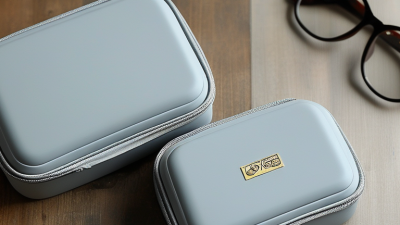
China Best Silicone Eyeglass Case Manufacturer?
How Silicone Eyeglass Cases Are Designed and Produced
A silicone eyeglass case starts with its intended shape and fit. Designers measure the glasses, including frame width, lens height, and folded-arm thickness. These dimensions guide the case’s inner space, opening, and wall thickness. Too tight, and the frames may be difficult to remove. Too loose, and they can shift around. Small details matter.
A prototype helps reveal issues that drawings cannot. Makers check how the case feels in the hand, whether the opening stays accessible, and if the material flexes without collapsing. Once the shape is approved, a mold forms the silicone. The material is mixed, placed into the mold, and cured with controlled heat. Excess material around the edges is trimmed. Then comes testing.
Production checks may include measuring samples, inspecting surfaces for bubbles or uneven seams, and repeatedly opening and closing the case. Material hardness also matters: softer silicone bends easily, while firmer silicone can hold its shape better. Neither choice suits every design. Color and texture should be checked under consistent lighting, since samples can look different across batches. These checks reduce surprises, but no process removes every variation. A useful specification leaves room to review real samples before larger production begins.
Quality standards for silicone eyeglass cases should be measurable, not just described as “premium.” Ask how the silicone grade is specified and whether batches are checked for hardness, dimensions, and visible defects. A case that feels soft in a sample may become loose after repeated use. Small details matter.
Request documented tests for tear strength, compression recovery, and aging under heat or light. These checks can reveal whether a hinge area splits, the shell stays flattened, or the color changes during storage. For lens protection, check the inner surface for rough spots and confirm the case fits the intended frame size. A low-odor finish can suggest controlled curing, but smell alone proves little. Ask for test methods and acceptance limits, not just a pass label.
Factory quality systems, such as ISO 9001, can support consistent inspection, though they do not certify every case. Review recent batch records, sample measurements, and corrective-action notes when available. If samples vary, ask why. Smaller suppliers may not keep perfect records; that is a point to verify, not an automatic reason to reject them. Set clear criteria before production.
China Best Silicone Eyeglass Case Manufacturer?
How to Compare Manufacturers in China
A useful comparison begins with the same product brief for every factory. Specify the case dimensions, wall thickness, closure style, color, and packaging. Ask what silicone material they propose and whether they can provide a material specification. Small details matter. A sample should fit your glasses without pressure, close securely, and have smooth edges without excess molding flash. Check the color in daylight and indoor light. Ask whether the sample was made with standard production methods or finished by hand, since those differences can affect consistency.
Compare more than the quoted unit price. Request separate figures for tooling, minimum order quantity, packaging, and sample costs, then confirm the estimated production schedule. Ask how the factory checks dimensions, color, and surface defects during a production run. Photos of inspection records can help, but they are not a substitute for clear answers about the process. A polished sample can hide variation between batches. Not always. If timing allows, review samples from more than one production run, and test how the case feels after repeated opening and closing. I would not treat one successful sample as proof that every detail will stay consistent.
| Comparison factor | What to compare | Manufacturer A | Manufacturer B | Manufacturer C | Evidence to request |
|---|---|---|---|---|---|
| Silicone material | Ask for the material type and any additives or coatings used. Confirm whether the case is made from silicone rubber and whether the supplier can provide material documentation. | To be confirmed | To be confirmed | To be confirmed | Material specification sheet; sample; written declaration of material composition. |
| Hardness and feel | Compare hardness using the Shore A scale, along with flexibility, surface feel, and resistance to permanent deformation. Specify the required result in the product drawing or purchase specification. | Quote required | Quote required | Quote required | Shore A test result with test method, sample identification, and testing date. |
| Dimensions and fit | Compare internal length, width, and depth against the intended eyewear. Check the fit with the largest frame size the case must accommodate. | Drawing required | Drawing required | Drawing required | Dimensioned drawing in millimetres; samples tested with the intended glasses. |
| Wall thickness and weight | Compare measured wall thickness and finished unit weight. These affect protection, flexibility, material use, and shipping weight. | To be measured | To be measured | To be measured | Approved sample; thickness and weight measurements with stated tolerances. |
| Closure and protection | Check how the case opens and closes, whether it stays closed during handling, and whether its shape protects lenses from contact with external objects. | Sample test required | Sample test required | Sample test required | Functional samples; agreed opening, closing, and handling test procedure. |
| Colour and surface finish | Compare colour consistency, texture, visible marks, flash, and surface defects. Approve a physical colour sample before mass production. | Sample required | Sample required | Sample required | Approved colour standard; pre-production sample; written visual acceptance criteria. |
| Logo and customization | Confirm available logo processes, placement limits, artwork requirements, and any added tooling or setup charges. | Options to confirm | Options to confirm | Options to confirm | Artwork proof; decorated sample; itemized setup and tooling costs. |
| Mould and tooling | Compare whether a new mould is needed, who owns it, how it is stored, and whether it can be used for production elsewhere. | Written terms required | Written terms required | Written terms required | Tooling quotation; ownership and storage terms; confirmation of maintenance charges. |
| MOQ and pricing | Compare minimum order quantity, unit price by order volume, sample charges, packaging charges, and payment terms. Request quotations on the same specification and delivery basis. | Quote required | Quote required | Quote required | Itemized quotation stating quantity breaks, currency, Incoterm, validity, and exclusions. |
| Production lead time | Separate sample development time from mass-production time. Confirm when the production clock starts and how public holidays or material delays are handled. | Written schedule required | Written schedule required | Written schedule required | Sample and production schedule; capacity confirmation for the requested order quantity. |
| Quality control | Compare incoming-material checks, in-process inspections, finished-product inspection, defect handling, and batch traceability. | Process to verify | Process to verify | Process to verify | Quality-control procedure; inspection report; sample defect classification and corrective-action process. |
| Testing and compliance | Identify the destination market and the requirements that apply to the product and its packaging. Do not treat a general certificate as proof that every product or market requirement is met. | Requirements to confirm | Requirements to confirm | Requirements to confirm | Relevant test reports or declarations, with product scope, test date, and issuing laboratory identified. |
| Packaging and shipping | Compare individual packaging, carton dimensions, units per carton, shipping marks, and the supplier’s ability to provide export documents. | Quote required | Quote required | Quote required | Packing specification; carton measurements and gross weight; sample shipping-document list. |
| Supplier verification | Confirm the legal entity, business scope, production address, and whether manufacturing is performed in-house or subcontracted. | Documents required | Documents required | Documents required | Business registration details; production-site information; a live factory or production-process review. |
| Overall evaluation | Score each supplier against the same approved specification, sample results, quotation terms, and documented evidence. | Score: ___ / 5 | Score: ___ / 5 | Score: ___ / 5 | Suggested scoring: 1 = does not meet requirements; 3 = meets requirements with open items; 5 = meets requirements with evidence. |
Choosing a silicone eyeglass case supplier takes more than comparing unit prices. Specify the silicone grade, Shore A hardness, wall thickness, closure style, and color tolerance. Ask for test results on hardness and tear strength, then check them against physical samples.
Press the lid repeatedly. Leave a case in a warm car. Small details matter. A sample may look excellent yet feel sticky or lose its shape after repeated use, so test production samples too.
Check how the supplier controls each batch. Request written inspection criteria, material traceability, defect records, and clear replacement terms.
McKinsey Global Institute’s 2020 survey found that 93% of supply-chain leaders planned to make their supply chains more resilient.
For a buyer, that means checking backup capacity, raw-material sourcing, and realistic lead times—not just asking whether a factory can meet one order. A neat factory tour helps, but it cannot replace records.
Compare suppliers with the same checklist: sample consistency, odor, surface finish, hinge strength, packaging protection, and response time when something goes wrong.
Ask for a small pilot run before committing to larger volumes. Note any measurement gaps; specifications are often incomplete on the first pass.
A supplier that explains test limits and corrects defects clearly may be a safer fit than one offering the lowest quote.