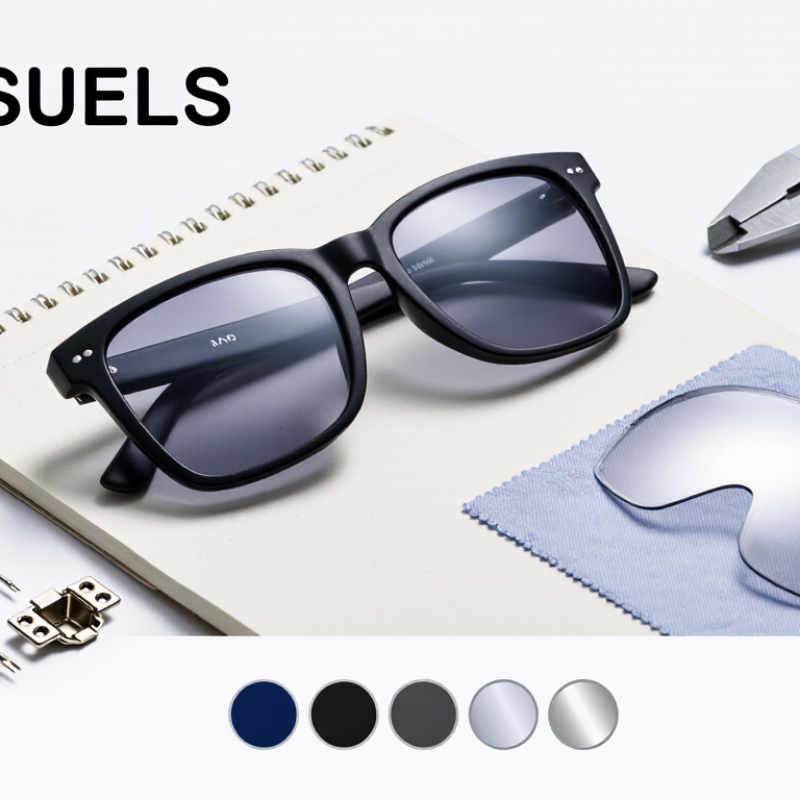
| Polarization Function |
Polarized lenses reduce reflected glare by selectively filtering horizontally oriented light. Polarization does not automatically guarantee ultraviolet protection. |
Request a polarization test for every approved production sample and specify the required glare-reduction performance in the purchase specification. |
Use a polarization test card or a calibrated optical test method. Check that both lenses have consistent polarization orientation. |
Polarization should be stated separately from UV protection on product specifications and packaging. |
| Ultraviolet Protection |
“UV400” generally refers to protection against ultraviolet radiation up to approximately 400 nm; the claim must be supported by test results. |
Require documented UVA and UVB protection performance, with the applicable destination-market standard identified. |
Verify spectral transmittance using a suitable UV-visible spectrophotometer or an accredited laboratory report. |
Do not rely only on a printed UV400 mark without supporting test documentation. |
| Lens Material |
Common options include CR-39 resin, polycarbonate, and nylon. Polycarbonate has an approximate refractive index of 1.586; CR-39 is approximately 1.498. |
Select polycarbonate or nylon when impact resistance and lighter weight are priorities; select CR-39 when optical clarity and scratch resistance are prioritized. |
Confirm material identity, thickness, tint uniformity, optical power, and surface defects against the approved sample. |
Material choice affects weight, freight volume, impact testing, and the required product declaration. |
| Optical Quality |
Sunglasses should maintain acceptable lens power, prism, transmittance, and cosmetic quality according to the destination-market requirements. |
Define tolerances for optical power, prism imbalance, lens thickness, tint density, and visible defects before mass production. |
Inspect lens alignment, optical distortion, bubbles, waves, scratches, coating marks, and left/right color consistency. |
Prescription and non-prescription eyewear may fall under different regulatory and labeling requirements. |
| Frame Material |
Common frame materials include acetate, injected plastics, stainless steel, aluminum, and flexible polymers. Material performance varies by formulation and construction. |
Specify the material, color reference, hinge construction, logo placement, dimensions, and permissible color tolerance. |
Check frame dimensions, hinge function, temple opening and closing, surface finish, welds, injection marks, and symmetry. |
Request a material declaration when destination regulations restrict certain substances. |
| Relevant Standards |
ISO 12312-1 covers general-purpose sunglasses and related eyewear requirements. ISO 8980-3 addresses transmittance specifications and test methods for spectacle lenses. |
Identify the exact standard and edition required by the destination country before placing the order. |
Match laboratory reports to the actual lens, frame, color, coating, and production configuration. |
European, North American, and other markets may apply different conformity, labeling, and documentation rules. |
| Color and Tint Control |
Lens tint affects visible-light transmittance and category classification in some markets. Color appearance alone is not a reliable measure of protection. |
Approve a physical color standard and specify visible-light transmittance targets for every lens color. |
Compare production lenses with the approved reference under controlled lighting and measure transmittance where required. |
Dark lenses are not necessarily safer; UV performance must be independently verified. |
| Coating and Durability |
Hard coatings can improve scratch resistance, while anti-reflective, mirror, and oleophobic coatings provide different functions and limitations. |
State the coating type, permitted cosmetic defects, adhesion requirement, and abrasion-test method in the quality agreement. |
Check coating adhesion, scratches, pinholes, delamination, color shift, and resistance after environmental conditioning. |
Coating durability can be affected by humidity, heat, chemicals, cleaning methods, and packaging conditions. |
| Product Dimensions |
Common eyewear measurements include lens width, bridge width, temple length, and total frame width, usually expressed in millimeters. |
Use a measurement format such as 52□18–140 mm and provide a dimension drawing with tolerances. |
Measure samples with calibrated tools and compare them with the approved technical drawing. |
Accurate dimensions reduce fitting complaints and help optimize carton and master-carton packing. |
| Packaging Protection |
Eyewear can be damaged by lens-to-lens contact, compression, moisture, and abrasion during handling and transport. |
Use individual sleeves or cases, protective separation, moisture-resistant inner cartons, and a strong export master carton. |
Conduct drop, vibration, compression, and unpacking inspections appropriate to the transport method. |
Packaging should show item quantity, carton dimensions, gross weight, net weight, and handling marks when required. |
| Pre-Production Approval |
A signed or digitally approved reference sample establishes the agreed construction, color, packaging, and labeling baseline. |
Approve one complete sample set before bulk production, including frame, lenses, accessories, packaging, and printed materials. |
Retain the approved sample and compare the first production output against it before authorizing continuation. |
Changes to material, mold, lens supplier, coating, or packaging should require written approval. |
| In-Process Inspection |
In-process inspection can identify assembly, tint, coating, and dimensional problems before final packing. |
Inspect during molding, lens insertion, coating, assembly, and packing rather than relying only on final inspection. |
Record defect type, quantity checked, photographs, corrective action, and re-inspection results. |
Inspection frequency and acceptance limits should be included in the purchase contract. |
| Final Inspection and AQL |
Acceptance Quality Limit sampling is a contractual inspection approach; it does not replace product-safety testing or regulatory conformity. |
Define the sampling plan, lot size, critical defects, major defects, minor defects, and acceptance numbers in advance. |
Use random samples from finished, packed goods and check quantity, appearance, function, dimensions, labeling, and documentation. |
Critical safety or compliance defects should normally have zero acceptance, subject to the agreed inspection plan. |
| Minimum Order Quantity |
MOQ is commercially negotiated and varies with customization, mold requirements, material, color count, and packaging complexity. |
Request separate MOQs for stock frames, custom colors, custom molds, polarized lenses, and customized packaging. |
Confirm whether the MOQ applies per style, color, lens type, or total order quantity. |
Lower quantities may increase unit cost, setup charges, or sampling fees. |
| Lead-Time Planning |
Production time depends on material availability, customization, testing, order quantity, seasonality, and approval speed. |
Set milestones for sample approval, material booking, production completion, inspection, and dispatch. |
Track actual progress against the agreed production schedule and require notification of delays. |
Do not treat a quoted lead time as including laboratory testing, customs clearance, or final-mile delivery unless stated. |
| Trade Terms |
Incoterms such as EXW, FOB, CIF, and DDP allocate different responsibilities, costs, and risks between buyer and seller. |
Name the Incoterms rule and version, place of delivery, cargo insurance responsibility, and customs-clearance obligations. |
Compare the commercial invoice, packing list, transport document, and agreed Incoterms details. |
Import duties, VAT or sales tax, brokerage fees, and destination charges may remain payable by the buyer. |
| Transport Selection |
Air freight is generally faster and more expensive; sea freight is generally slower and more economical for larger shipments. |
Choose transport according to carton volume, required delivery date, budget, product value, and customs complexity. |
Confirm carton count, dimensions, gross weight, shipping marks, and transport documents before dispatch. |
Request a freight quotation based on actual packed dimensions and weight rather than product quantity alone. |
| Export Documentation |
Typical documents may include a commercial invoice, packing list, transport document, and, where applicable, certificate of origin and conformity documents. |
Confirm the destination country’s required documents before production and ensure all documents use consistent product descriptions. |
Check quantities, HS classification information, declared values, consignee details, and country-of-origin statements. |
Incorrect or inconsistent documents can cause customs delays, additional costs, or inspection holds. |
| Traceability |
Traceability links finished goods to production batches, materials, inspection records, and shipment information. |
Assign batch or lot numbers and retain records for frame materials, lenses, coatings, inspections, and packaging. |
Verify that cartons, internal labels, inspection reports, and invoices can be linked to the same shipment lot. |
Traceability supports complaint investigation, targeted replacement, and regulatory response. |
| Buyer Checklist |
Technical specification, compliance evidence, sample approval, inspection plan, shipping terms, and documentation should be completed before dispatch. |
Use a written purchase specification covering product, quality, packaging, inspection, delivery, and dispute procedures. |
Release payment or shipment only after the agreed inspection and document review are complete. |
Keep purchase records, approved samples, test reports, photographs, and shipment documents for future reference. |